You must be signed in to read the rest of this article.
Registration on CDEWorld is free. You may also login to CDEWorld with your DentalAegis.com account.
Introduction
The global oral care market is estimated to be $24.2B in 2024 and is projected to grow to $36.4B in the next decade 1 . Around half of the worlds population use dentifrice (toothpaste) and in the US, over 94% of individuals report toothpaste use 2 . Further, the World Health Organization (WHO) and the American Dental Association (ADA) recommend oral hygiene practices that include toothbrushing with dentifrice containing between 1000ppm to 1500ppm twice daily 3,4 . While industry sources estimate that fluoride-free dentifrices comprise less than 5% of all dentifrice sold in the US, sales of fluoride-free dentifrice are estimated to demonstrate a compound annual growth rate of 5% through 2032 5 . This is highlighted when searching for toothpaste on online platform, where the top-selling toothpaste is a fluoride-free antiplaque and whitening toothpaste containing calcium carbonate 6 . Given the prevalence toothpaste use in the US population and the clear recommendations from governing bodies, it is critical that dental healthcare professionals understand the advantages and disadvantages of commercially available and emerging dentifrice technologies. This article seeks to review active ingredients in commercially available dentifrices as well as emerging technology and discuss the clinical implications for decision-making for oral home care.
Patients report that they use dentifrice for many purposes including: 1) plaque removal, 2) fluoride delivery and tooth decay prevention, 3) promotion of gingival health, 4) cosmetic purposes including treating bad breath and tooth whitening, 5) stain removal, and 6) reduction of dentinal hypersensitivity. Based upon the clinical conditions and risk factors of a particular patient, dental healthcare providers should be aware of potential benefits of dentifrices and their ingredients and make appropriate recommendations to address patient concerns and risks.
Fluoride
Current recommendations from the ADA and WHO state that individuals should brush with a fluoride-containing dentifrice twice-daily for 2 minutes. Incorporation of fluoride into the crystalline mineral structure of enamel during remineralization after acid challenge results in the formation of fluorapatite, which is then more resistant to demineralization with subsequent acid challenge and therefore reduces the risk of dental caries development 7 . Fluoride has been shown to delay demineralization and promote remineralization of incipient enamel lesions 8 . Fluoride also interferes with glycolysis; whereby cariogenic bacteria metabolize sugars to produce acid 8 . However, there are different fluoride formulations that can be included in toothpaste. In the U.S., the formulations found are typically sodium fluoride, sodium monofluorophosphate, and stannous fluoride 7 . Fluoride formulation is important because the delivery method and fluoride solubility in the intraoral environment contributes to available free fluoride during remineralization. The presence and amounts of inactive ingredients can also impact fluoride availability and efficacy. For example, sodium fluoride requires a detergent to prevent the fluoride ions from reacting with the silica in the toothpaste to form insoluble fluorosilicates 9 . Further, sodium monofluourophosphate and stannous fluoride formulations may also require abrasives and/or detergents for optimal efficacy 10 . A common detergent used in dentifrices, particularly those with sodium fluoride toothpastes, is sodium laurel sulfate (SLS). This ingredient has shown to affect oral mucosa in some patients and can propagate the number and severity of aphthous ulcers in susceptible individuals, 11 which may limit patients ability to tolerate such dentifrices and impact compliance with oral hygiene recommendations Studies have found that stannous fluoride has more anticariogenic effect compared to sodium fluoride 11 . The stannous fluoride compound is formed when tin and fluoride molecules are combined (SnF 2 ). When stannous fluoride is used in dentifrice the tin forms a layer over the teeth resulting in decreased plaque formation, which can lead to a reduction in caries and gingivitis incidence 12,13 . Stannous fluoride also has anti-hypersensitivity activity 14 . In the case of hypersensitivity, the stannous fluoride molecule is relatively large and precipitation on exposed dentin can result in occlusion of exposed dentinal tubules thus decreasing fluid flow to the pulpal space 14 . Sodium monofluorophosphate has also been used to treat dentinal hypersensitivity. The mechanism of action differs in that sodium monofluorophosphate employs phosphate salts to occlude the dentinal tubules 15 . Unwanted effects of some fluoride formulations have been noted. For instance, some formulations of stannous fluoride have been reported to increase stain deposition on teeth 12 . The anticariogenic properties of fluoride use in dentifrice is well documented. Comparisons between fluoride formulations and studies have shown mixed results comparing the anticariogenic properties of sodium fluoride versus sodium monofluorophosphate containing dentifrices 15 . Both stannous fluoride and sodium monofluorophosphate have shown usefulness in halting tooth sensitivity 16,17 .
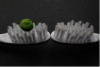
A concern in the use of all fluoride-containing products is fluorosis, which occurs when fluoride is incorporated into enamel crystalline structures at rates above threshold levels. In mild forms, fluorosis presents as opaque or white marks on the tips of cusps and incisal edges, sometimes called snowcapping 7 . Severe fluorosis consists of these white marks combined with brown areas and pitting spread across the entire surface of the tooth 18 . Fluorosis occurs because of too much fluoride consumption during tooth development, which has generally been associated with high levels of fluoride in the diet of pregnant women and young children or misuse of fluoride containing oral care products. The American Academy of Pediatric Dentistry (AAPD) states that children aged 15 to 30 months are most susceptible for fluorosis of the permanent incisors 19 . The CDC recommends water fluoridation levels to be at 0.7 mg/L to attain the anticariogenic benefits of fluoride while also minimizing the potential for fluorosis 20 . When people live in areas where the water fluoridation level is below 0.6 mg/L, the AAPD states that adding supplemental fluoride can be considered and, conversely, in areas with ground water that naturally contains higher levels of fluoride, dilution is recommended. However, all possible sources of fluoride need to be considered including drinking water at home, daycare, and/or school via juice, sodas, infant formula, prepared foods, and toothpaste. If the level of fluoride consumption is still below the recommended amount, the AAPD recommends exercising caution when recommending fluoride supplements in children under the age of six due to their continued dental development and consumption of fluoride from a variety of sources 19 . In addition, to reduce the risk of fluorosis from fluoride-containing dentifrice, the AAPD also recommends using a smear or rice-sized amount of toothpaste for children less than 3 years of age and a pea-sized amount of toothpaste for children aged 3 to 6 years of age as these children may not fully expectorate the toothpaste after use 19 . Figure 1 demonstrates the appropriate size of fluoride dentifrice recommended for children. After age 6, children are recommended to spit after brushing to avoid over-ingestion of fluoride 19 .

Figure 1 : Appropriate size of fluoride dentifrice for children: 3-6 years should use a pea-sized amount (right) and < 3years should use a smear/rice grain-sized (left) amount of fluoride-containing toothpaste
Anti-hypersensitivity Agents
Dentinal hypersensitivity is thought to occur when external stimuli cause fluid movement within exposed dentinal tubules stimulated odontogenic processes within the tubules and leading to activation of pulpal nerve endings resulting in pain 21 . For patients experiencing dentinal hypersensitivity, there a variety of active dentifrice ingredients that have shown efficacy in relieving these symptoms. Such ingredients include: 1) potassium nitrate 22 , 2) strontium chloride 23 , 3) stannous fluoride, 4) arginine, and 5) calcium sodium phosphosilicate. Potassium nitrate reduces dentinal hypersensitivity sensitivity by depolarizing the sensory nerves through potassium ion activity 22 . Strontium chloride and calcium sodium phosphosilicate both help to relieve dental hypersensitivity by occluding dentinal tubules and decreasing hydrodynamic changes during tactile or temperature challenge 24,25 . Of note, dentifrice containing calcium sodium phosphosilicate has shown superiority in reducing pain perception to noxious stimuli and relieving hypersensitivity compared to potassium nitrate 26 . Strontium nitrate and calcium sodium phosphosilicate have shown similar overall hypersensitivity relief, but the calcium sodium phosphosilicate may provide relief more immediately 27 . Stannous fluoride, on top of having anticariogenic properties, has demonstrated significant improvements in dentinal hypersensitivity up to one month post-treatment 28 . This can be compared to arginine (which will be discussed further in the Remineralization Agents section), which caused reduction in dentinal hypersensitivity beyond one-month post treatment 28 .
Remineralization Agents
In addition to fluoride, other remineralization agents have been suggested to encourage remineralization after acid challenge and reduce caries rates. Nanohydroxyapatite has been shown to be useful in remineralization of early dental caries as it replaces minerals due to acid attack 29 . The nanoparticles penetrate hard tissues of the tooth and can then directly replace the same ions that were destroyed. This penetration into tooth structure enhances mineralization in the outer layer of the tooth 30 . In a study, in situ remineralization with 10% nanohydroxyapatite weas comparable to 1100ppm sodium fluoride related to lesion depth and surface microarchitecture 30 . These data indicate nanohydroxyapatite could be an alternative to fluoride for the treatment and/or prevention of early caries. However, unlike fluoride, the final remineralization crystalline product is hydroxyapatite and thus less resistant to acid challenge than fluorapatite.
Arginine is an amino acid that is involved in protein synthesis, immune regulation, and nitric oxide production 31 . Arginine has also been used as a component of dentifrice for caries prevention and anti-hypersensitivity. Briefly, arginine is metabolized by bacteria which leads to the production of ammonia-like substances. Arginine and these bacterial byproducts have a basic pH which counteracts oral acids thereby decreasing demineralization of tooth hard tissues 32 . Further, an intraoral increase in pH may also impact acid-resistant bacteria 32 . Current literature evaluating the efficacy of arginine for caries prevention is equivocal 32 . A systematic review found that toothpastes containing arginine combined with monofluorophosphate (MFP) showed no benefit to fluoride dentifrices 32 . Conversely, a more recent scoping review demonstrated that the addition of arginine to fluoride dentifrices was superior to fluoride alone in caries prevention 33 . As stated above, arginine has shown definitive results to its efficacy in relieving dentinal hypersensitivity 28 . Recently, toothpastes containing arginine with or without fluoride have been marketed to address caries and dentinal hypersensitivity 34 . Therefore, dental healthcare providers should be aware of the indications for these dentifrice formulations and the current evidence supporting their use.
Whitening Formulations
Patients often report that one goal of oral home care delivery is tooth whitening. Tooth whitening products in dentifrices are often achieved through the addition of abrasives to remove external stains. The American Dental Association developed a standardized scale for abrasiveness called Relative Dentin Abrasivity (RDA). An RDA less than 100 will not remove significant extrinsic staining and an RDA of greater than 250 is overly abrasive to tooth structure and considered unsafe for use 35 . Abrasives included in whitening dentifrices include Hydrated silica, Calcium carbonate, Dicalcium phosphate dihydrate, Calcium pyrophosphate, Alumina, Perlite, Sodium bicarbonate 36 . Commercial claims associated with charcoal-containing toothpaste include superior whitening. Advertising claims include that activated charcoal in these dentifrices bind to deposits on the tooth surface and enable mechanical toothbrushing to remove extrinsic staining 37 . However, research has revealed that this product has demonstrated similar whitening to other commercially available products with increased abrasivity, which could result in the unnecessary abrasive tooth wear and the formation of noncarious cervical lesions 37 . Most whitening agents in dentifrice target extrinsic staining through abrasives and/or peroxides 36 .Peroxides cause discoloration or bleaching of the colored materials found within the tooth thus leading to whiter teeth 36 . Its effectiveness for providing intrinsic tooth whitening via trays and strips is well-established, but delivery with toothpaste is more challenging due to limited exposure times 36 . Despite this, peroxides have still been shown to be effective for removing extrinsic staining in this delivery method as well 36 . Products including purple colorations have also been proposed for improving tooth color. These products are proposed to place a semitransparent film of this purple pigment onto the tooth which alters its interaction with light that results in whiter and brighter perception of teeth 38 . This product has been shown to be just as effective as conventional toothpaste at improving tooth shade 38 .
Emerging Technologies
In addition to fluoride and other remineralization agents, other emerging technologies have been proposed for use alone or as an adjunctive ingredient with fluoride in dentifrice. One such compound is ethylenediaminetetraacetic acid (EDTA). EDTA is a chelating agent which binds to metal cations thereby making them inactive. As a result, the dental pellicle becomes more negatively charged which repels the negatively charged bacteria thus leading to reduced bacterial adhesion to the tooth 39 . EDTA has been shown to improve plaque indices, gingival inflammation, bleeding on probing in patients with gingivitis and in those with periodontitis undergoing periodontal maintenance. 39-41
Propolis is a common ingredient in natural or organic oral hygiene products and is also called royal bee jelly. Laboratory studies have demonstrated antibacterial, anti-inflammatory, antioxidant, antiviral, antifungal, antitumor, and hepatoprotective properties of propolis 42 . A systematic review demonstrated that propolis led to improvements in gingival indices, inhibited bacterial growth, and improved microbial composition 42 .
Additional emerging ingredients for dentifrices include the use of anti-inflammatory compounds to reduce gingival inflammation in patients at a higher risk for gingival inflammation and periodontitis. One example of such components is atorvastatin. Atorvastatin has been shown to reduce proinflammatory cytokines like IL-1beta, TNF-alpha, and C reactive protein 43 . Continually, atorvastatin has shown that it can improve probing depths, bleeding upon probing and gingival index 43 .
Clinical Implications
The goal of this information is to analyze it and apply it to patient care. For patients that are high caries risk, using a toothpaste containing greater concentration of fluoride, like prescription toothpaste containing 5000 ppm fluoride, is advised. For patients experiencing sensitivity, using a toothpaste containing arginine would be beneficial to providing the patient long-term sensitivity relief. Additionally, for the patients with periodontal disease, it maybe optimal to recommend a dentifrice containing EDTA and/or stannous fluoride whereas for a patient who presents with dentinal hypersensitivity, use of potassium nitrate and stannous fluoride may provide both immediate and long-term sensitivity relief.
Conclusion
Dental healthcare providers should be aware of the advantages and disadvantages of commercially available and emerging ingredient found within dentifrices and the evidence for their use. Customization of clinical recommendations for patients based upon overall risk profiles and clinical presentations is critical to provide patients with the tools to optimally deliver oral hygiene. Understanding the underlying evidence, risks, and benefits of various dentifrice formulations allows dental healthcare providers to offer patients evidence-based recommendations that best meet their needs for optimal oral health.
|
Ingredient |
Area(s) of benefit |
|
Sodium fluoride |
Caries |
|
Sodium monofluorophosphate |
Caries, hypersensitivity |
|
Stannous fluoride |
Caries, hypersensitivity |
|
Potassium nitrate |
Hypersensitivity |
|
Strontium chloride |
Hypersensitivity |
|
Arginine |
Hypersensitivity, caries prevention |
|
Calcium sodium phosphosilicate |
Hypersensitivity |
|
Nanohydroxyapatite |
Remineralization |
|
Hydrated silica |
Whitening |
|
Calcium carbonate |
Whitening |
|
Dicalcium phosphate dihydrate |
Whitening |
|
Calcium pyrophosphate |
Whitening |
|
Alumina |
Whitening |
|
Perlite |
Whitening |
|
Sodium bicarbonate |
Whitening |
|
Peroxide |
Whitening |
|
EDTA |
Periodontal disease |
|
Propolis |
Gingival health |
|
Atorvastatin |
Gingival health |
References
1. Fact Market Research. Oral Hygiene Product Market. Available at: https://www.factmr.com/report/68/oral-hygiene-market
2. Statista. U.S. population: How many times do you use toothpaste on an average day? Available at: https://www.statista.com/statistics/278187/us-households-average-daily-usage-of-toothpaste/
3. Fluoride ToothpasteWorld Health Organization. Available at: https://cdn.who.int/media/docs/default-source/essential-medicines/2021-eml-expert-committee/applications-for-addition-of-new-medicines/a.14_fluoride-toothpaste.pdf?sfvrsn=4eb40f4c_4#:~:text=The%20recommended%20concentration%20in%20toothpaste,ppm%20for%20 .
4. American Dental Association. Home Oral Care. Available at: https://www.ada.org/resources/ada-library/oral-health-topics/home-care
5. Wise Guy Reports. Fluoride-Free Toothpaste Tablet Market . Available at: https://www.wiseguyreports.com/reports/fluoride-free-toothpaste-tablet-market . Accessed March 10, 2025.
6. Newlea. More people are using fluoride-free toothpaste; dentists are worried. Available at: https://tea4avcastro.tea.state.tx.us/thl/ENG1.W2.L5.Most-people-are-using-fluoride-free-toothpaste.pdf
7. American Dental Association. Fluoride: Topical and systemic supplements. ADA Library. Updated June 14, 2023. Accessed March 1, 2025. https://www.ada.org/resources/ada-library/oral-health-topics/fluoride-topical-and-systemic-supplements
8. Rugg-Gunn AJ, Do L. Fluoride and oral health. Community Dent Health. 2012;29(2):131-146.
9. Carey CM. Focus on fluorides: update on the use of fluoride for the prevention of dental caries. J Evid Based Dent Pract. 2014;14(Suppl):95-102. doi:10.1016/j.jebdp.2014.02.004
10. Miller S, Truong T, Heu R, Stranick M, Bouchard D, Gaffar A. Recent advances in stannous fluoride technology: antibacterial efficacy and mechanism of action towards hypersensitivity. Int Dent J. 1994;44(1 Suppl 1):83-98. PMID: 8021041.
11. Joseph C. Muhler, Arthur W. Radike, William H. Nebergall, Harry G. Day,A comparison between the anticariogenic effects of dentifrices containing stannous fluoride and sodium fluoride, The Journal of the American Dental Association, 51(5), 1955, 556-559
12. Meyers CP, Pappas I, Makwana E, et al. Solving the problem with stannous fluoride: Formulation, stabilization, and antimicrobial action. J Am Dent Assoc. 2019;150(Suppl 4):S5S13.
13. Archila L, Bartizek RD, Winston JL, et al. The comparative efficacy of stabilized stannous fluoride/sodium hexametaphosphate dentifrice and sodium fluoride/triclosan/copolymer dentifrice for the control of gingivitis: a 6-month randomized clinical study. J Periodontol. 2004;75(12):1592-1599. doi:10.1902/jop.2004.75.12.1592
14. Hines D, Xu S, Stranick M, et al. Effect of a stannous fluoride toothpaste on dentinal hypersensitivity: In vitro and clinical evaluation. J Am Dent Assoc. 2019;150(4 Suppl):S47-S59. doi:10.1016/j.adaj.2019.01.006.
15. Volpe AR, Petrone ME, Davies RM. A critical review of the 10 pivotal caries clinical studies used in a recent meta-analysis comparing the anticaries efficacy of sodium fluoride and sodium monofluorophosphate dentifrices. Am J Dent . 1993;6(Spec No):S13-42. PMID: 7488352.
16. He T, Barker ML, Qaqish J, Sharma N. Fast onset sensitivity relief of a 0.454% stannous fluoride dentifrice. J Clin Dent . 2011;22(2):46-50. PMID: 21702325.
17. Kanouse MC, Ash MM Jr. The effectiveness of a sodium monofluorophosphate dentifrice on dental hypersensitivity. J Periodontology . 1969; 40(1):[38-40].
18. Stefania Martignon, David Bartlett, David J. Manton, E. Angeles Martinez-Mier, Christian Splieth, Viviana Avila; Epidemiology of Erosive Tooth Wear, Dental Fluorosis and Molar Incisor Hypomineralization in the American Continent. Caries Res 4 February 2021; 55 (1): 111. https://doi-org.uab.idm.oclc.org/10.1159/000512483
19. American Academy of Pediatric Dentistry. Fluoride therapy. The Reference Manual of Pediatric Dentistry . Chicago, IL: American Academy of Pediatric Dentistry; 2024:351-7.
20. Centers for Disease Control and Prevention. Community water fluoridation recommendations. CDC . Published May 15, 2024. Accessed February 1, 2025. https://www.cdc.gov/fluoridation/about/community-water-fluoridation-recommendations.html
21. Absi E, Addy M, Adams D. Dentine hypersensitivity: A study of the patency of dentinal tubules in sensitive and non-sensitive cervical dentine. J Clin Periodontol. 1987;14(5):280-284. doi:10.1111/j.1600-051X.1987.tb01533.x. PMID: 3475295.
22. Nagata T, Ishida H, Shinohara H, et al. Clinical evaluation of a potassium nitrate dentifrice for the treatment of dentinal hypersensitivity. J Clin Periodontol . 1994;21(3):165-169.
23. Minkoff S, Axelrod S. Efficacy of strontium chloride in dental hypersensitivity. J Periodontol . 1987;58(7):470-473.
24. Saeki K, Marshall GW, Gansky SA, Parkinson CR, Marshall SJ. Strontium effects on root dentin tubule occlusion and nanomechanical properties. Dent Mater. 2016;32(2):240-251. doi:10.1016/j.dental.2015.11.020.
25. Acharya AB, Surve SM, Thakur SL. A clinical study of the effect of calcium sodium phosphosilicate on dentin hypersensitivity. J Clin Exp Dent. 2013 Feb 1;5(1):e18-22. doi: 10.4317/jced.50955.
26. Pradeep AR, Sharma A. Comparison of clinical efficacy of a dentifrice containing calcium sodium phosphosilicate to a dentifrice containing potassium nitrate and to a placebo on dentinal hypersensitivity: A randomized clinical trial. J Periodontol . 2010;81(8):1161-1168.
27. Aggarwal SD, Borkar A, Borse N, Acharya A. Comparative evaluation of fluoro calcium phosphosilicate, calcium sodium phosphosilicate, and strontium chloride hexahydrate containing dentifrice for the treatment of dentin hypersensitivity: A randomized single-blind study. J Int Oral Health . 2019;11(6):404-411.
28. Marto CM, Baptista Paula A, Nunes T, Pimenta M, Abrantes AM, Pires AS, Laranjo M, Coelho A, Donato H, Botelho MF, Marques Ferreira M, Carrilho E. Evaluation of the efficacy of dentin hypersensitivity treatments-A systematic review and follow-up analysis. J Oral Rehabil. 2019 Oct;46(10):952-990. doi: 10.1111/joor.12842. Epub 2019 Jul 12. PMID: 31216069.
29. Najibfard K, Ramalingam K, Chedjieu I, Amaechi BT. Remineralization of early caries by a nano-hydroxyapatite dentifrice. J Clin Dent . 2011;22(5):1-5.
30. Pushpalatha C, Gayathria VS, Sowmya SV, Augustine D, Alamoudi A, Zidane B, Albare NHM, Bhandi S.Nanohydroxyapatite in dentistry: A comprehensive review. Saudi Dent J. 2023;35(6):741-752. doi:10.1016/j.sdentj.2023.05.012.
31. Mayo Clinic. L-arginine: Overview, uses, and benefits. Mayo Clinic. Updated 2024. Accessed March 3, 2025. https://www.mayoclinic.org/drugs-supplements-l-arginine/art-20364681 .
32. lfheiur stvaldsdttir, Aron Naimi-Akbar, Thomas Davidson, Agneta Brolund, Laura Lintamo, Anna Attergren Granath, Sofia Tranus, Pernilla stlund; Arginine and Caries Prevention: A Systematic Review. Caries Res 1 September 2016; 50 (4): 383393.
33. Bijle MN, Ekambaram M, Yiu CKY. A scoping review on arginine in caries prevention. J Evid Based Dent Pract . 2020;20(3):101470.
34. Colgate-Palmolive Company. Colgate Sensitive Pro-Relief Repair & Prevent Toothpaste. Colgate. Accessed March 3, 2025. https://www.colgate.com/en-ca/products/toothpaste/colgate-sensitive-pro-relief-repair-prevent-toothpaste
35. American Dental Association. Toothpastes. ADA Library. Updated July 8, 2021. Accessed March 2, 2025. https://www.ada.org/resources/ada-library/oral-health-topics/toothpastes .
36. Joiner A. Whitening toothpastes: a review of the literature. J Dent. 2010;38(Suppl 2):e17-e24. doi:10.1016/j.jdent.2010.05.017.
37. Montero Toms DB, Pecci-Lloret MP, Guerrero-Girons J. Effectiveness and abrasiveness of activated charcoal as a whitening agent: A systematic review of in vitro studies. Ann Anat. 2023;245:151998. doi:10.1016/j.aanat.2022.151998.
38. Meireles, S.S., de Sousa, J.P., Lins, R.B.E., Sampaio, F.C. Efficacy of Whitening Toothpaste Containing Blue Covarine: A Double-blind Controlled Randomized Clinical Trial.Journal of Esthetic and Restorative Dentistry. 2021;33(2): 341-350. https://doi.org/10.1111/jerd.12605
39. Kaur M, Geurs NC, Cobb CM, et al. Evaluating efficacy of a novel dentifrice in reducing probing depths in Stage I and II periodontitis maintenance patients: A randomized, double-blind, positive controlled clinical trial. J Periodontol . 2021;92(9):1286-1294.
40. Geisinger ML, Geurs NC, Novy B, et al. A randomized double-blind clinical trial evaluating comparative plaque and gingival health associated with commercially available stannous fluoride-containing dentifrices as compared to a sodium fluoride control dentifrice. J Periodontol . 2023;94(9):1112-1121.
41. Lin K, Takesh T, Lee JH, et al. Effects of a Dental Gel Over 6 Months on Periodontal Health in Subjects with Stage II and III (Mild and Moderate) Periodontitis. J Dent Oral
42. Saeed MA, Khabeer A, Faridi MA, Makhdoom G. Effectiveness of propolis in maintaining oral health: a scoping review. Can J Dent Hyg. 2021 Oct 1;55(3):167-176.
43. Rosenberg DR, Andrade CX, Chaparro AP, Inostroza CM, Ramirez V, Violant D, Nart J. Short-term effects of 2% atorvastatin dentifrice as an adjunct to periodontal therapy: a randomized double-masked clinical trial. J Periodontol. 2015 May;86(5):623-30.